Facial Massage Tools: Rollers, Gua Sha & Safety
A practical guide to face rollers, gua sha, and electric massagers—with realistic expectations and comfort-first tips.
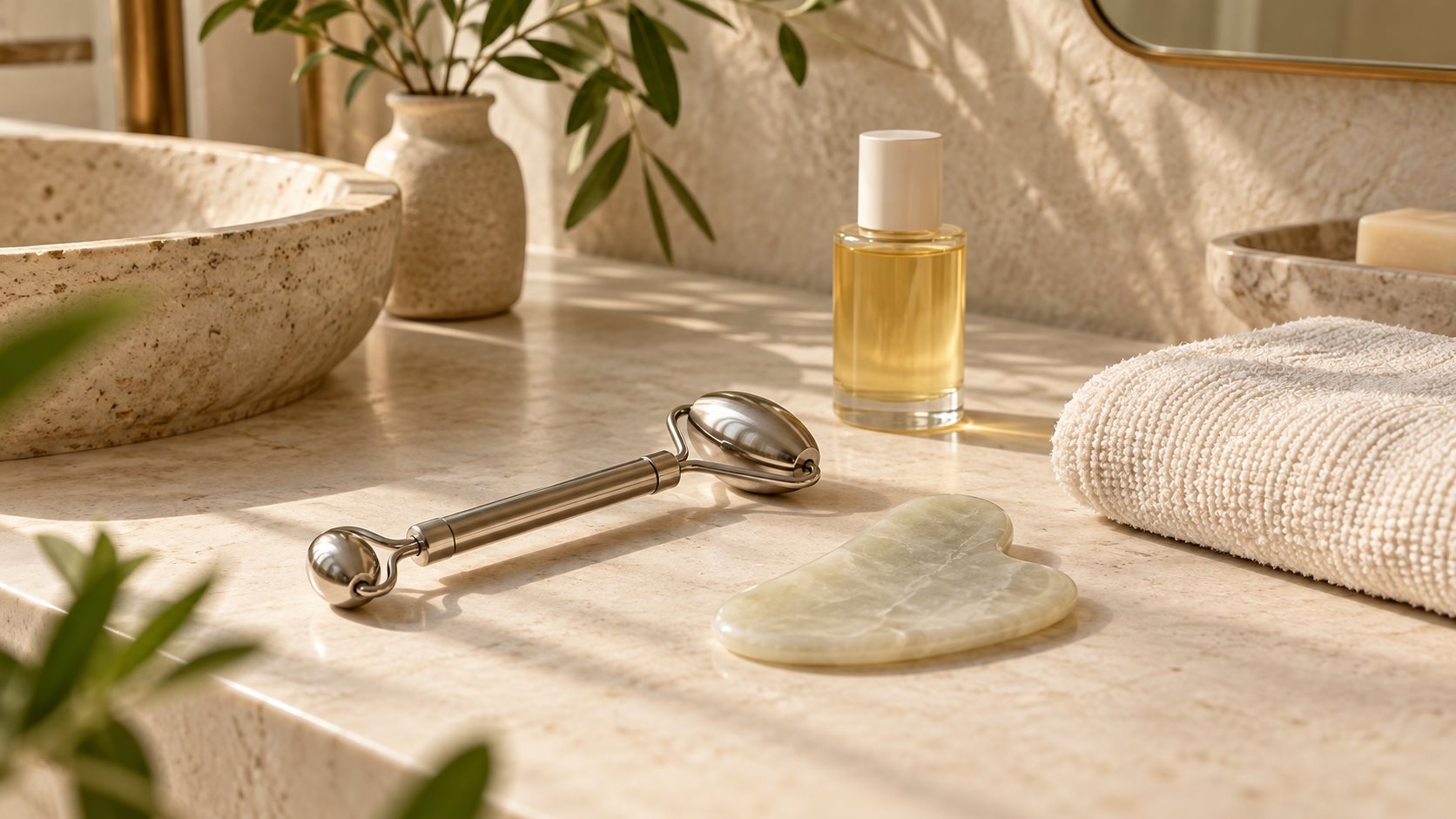
Compare common facial massage tools
Choose by comfort, ease of cleaning, and how you plan to use it—not by promises on the package. You do not need a special tool to massage your face.
- Hands or fingertips: easy to clean, no purchase needed, and simple to stop or adjust. Use clean hands and a light touch.
- Face roller: a rolling head glides across the skin and can feel cool, especially if kept comfortably chilled. It is often easier to use than a flat stone, but hinges and textured parts may take extra care to clean.
- Gua sha stone: a smooth, curved edge can glide over a small area with a light touch. It takes practice to avoid scraping or pressing too hard. A tool should never leave bruising.
- Electric face massager: vibration or heat adds another feature, not proof of better results. Follow the maker’s instructions, avoid excessive heat, and do not use over irritated or broken skin.
What tools can and cannot do
A tool may make a short skincare routine feel pleasant and help spread a compatible moisturizer or facial oil. A cool roller may briefly make skin feel refreshed, and gentle massage can temporarily change how puffiness looks. Cleveland Clinic describes face-roller effects as temporary rather than lasting changes.
Research on beauty tools remains limited. A small randomized study compared facial roller and gua sha use over eight weeks, but a single small study cannot establish broad or lasting benefits for everyone. Claims that a face massager detoxes the body, removes fat, permanently lifts skin, or changes bone structure go beyond what a consumer tool can promise.
For clinician-directed care of diagnosed swelling, a beauty roller is not the same as manual lymphatic drainage. Read our guide to facial lymphatic drainage for the difference and when to seek professional advice.
How to use a tool gently
- Start with clean hands, a clean tool, and skin that is not irritated.
- If the tool drags, use a small amount of a product your skin already tolerates; skip fragranced or new products if you are sensitive.
- Use light pressure and slow, comfortable movements. Do not scrape, press hard, or try to force fluid in a particular direction.
- Keep the tool away from the eyeball, open skin, active breakouts that hurt, and areas that feel tender.
- Stop if you notice pain, stinging, persistent redness, or bruising. A routine should feel comfortable, not like a workout.
There is no proven schedule or number of passes required for a cosmetic routine. Keep it brief and optional. Our facial massage techniques guide covers simple, hands-only options.
Cleaning and skin safety
Follow the tool’s cleaning instructions after each use, let it dry fully, and do not share it unless it can be cleaned as directed between users. Check stone and roller heads for chips or rough edges. Do not use a cracked tool on your face.
Skip massage over a rash, sunburn, infection, open cut, or skin that is acutely inflamed. If you have a skin condition, recent facial procedure, or treatment that makes your skin fragile, ask your dermatologist or treating clinician before adding friction or pressure. Stop if symptoms worsen.
Tools and medical swelling
New or persistent swelling should not automatically be treated as a cosmetic concern. Sudden, painful, one-sided, or worsening swelling—and swelling with fever, trouble breathing, or trouble swallowing—needs prompt medical advice. If you have diagnosed lymphoedema or swelling after surgery or cancer treatment, ask your care team before using a tool; specialist drainage techniques are individualized.
Frequently asked questions
Which facial massage tool is best?
The best choice may be no tool at all. If you enjoy using one, pick a smooth, easy-to-clean option that feels comfortable and lets you keep pressure light.
Can a lymphatic drainage face massager slim my face?
No tool can promise lasting face slimming or fat loss. A temporary appearance change from reduced puffiness is different from changing facial structure or treating a medical condition.
Is a face roller better than gua sha?
Neither is established as universally better. A roller may be easier to glide; gua sha offers a different shape and requires care to avoid excess pressure. Choose whichever is comfortable and easy to clean.
Can I use a face massager every day?
There is no required daily routine. Follow the tool instructions, keep pressure gentle, and take a break if your skin becomes irritated or tender.
Sources and further reading
- Cleveland Clinic: Face Rolling—How to Do It and Its Many Benefits
- Gua-sha, Jade Roller, and Facial Massage: Are there benefits within dermatology? (review)
- Comparative Effects of Facial Roller and Gua Sha Massage (small randomized trial)
- NHS: Lymphoedema treatment
These sources inform general consumer education; they do not provide an individual diagnosis or treatment plan.
Related reading: Facial lymphatic drainage · Gua sha vs. facial massage · Facial massage techniques